


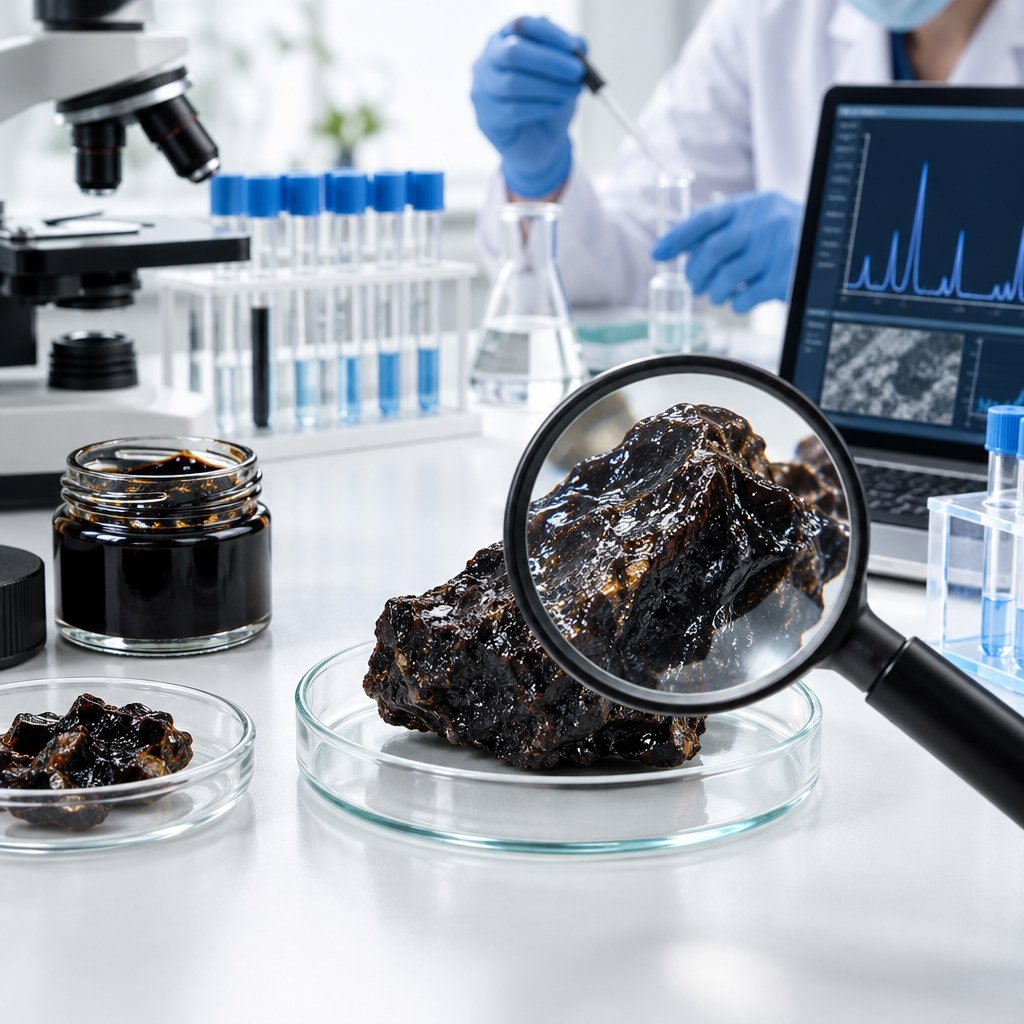
The Shilajit market in Pakistan is flooded with fake and adulterated products. From coal tar mixed with herbs to cheap powders sold as “pure resin,” it can be difficult to know what is real and what is not. Knowing how to test Shilajit purity at home can save you from wasting money — and protect your health.
Here are five simple tests you can do at home to verify whether your Shilajit is genuine.
1. The Dissolving Test (Water Solubility)
How to do it: Take a small piece of Shilajit and drop it into a glass of warm water. Stir gently.
What to look for: Pure Shilajit dissolves completely within a few minutes, turning the water a dark reddish-brown or golden colour. It should not leave any residue, chunks, or particles at the bottom of the glass.
Red flag: If it does not dissolve, leaves gritty residue, or the water stays clear, it is likely fake or heavily adulterated.
2. The Flame Test
How to do it: Take a small piece of Shilajit and hold a flame (lighter or match) to it.
What to look for: Pure Shilajit does not catch fire or burn with a flame. It will bubble, swell slightly, and produce ash. When the flame is removed, it stops bubbling.
Red flag: If the Shilajit catches fire, burns with a flame, melts like plastic, or produces black smoke, it is not genuine. Real Shilajit is a mineral-rich resin, not a combustible material.
3. The Pliability Test (Temperature Response)
How to do it: Hold a piece of Shilajit between your fingers for 30–60 seconds, then try to stretch or mould it. Next, place a piece in the refrigerator for 15–20 minutes and try to break it.
What to look for: Pure Shilajit becomes soft and pliable when warm (body temperature or warmer). When cold, it becomes hard and brittle — you should be able to snap it cleanly.
Red flag: If the Shilajit stays hard at room temperature, remains gooey when cold, or has a plastic-like consistency regardless of temperature, it is likely fake.
4. The Smell and Taste Test
What to look for: Genuine Shilajit has a distinct, strong smell — earthy, smoky, and slightly bitter. The taste is bitter and metallic, with a lingering mineral aftertaste. It is not pleasant, but it is distinctive.
Red flag: If your Shilajit tastes sweet, has no smell, or smells like chemicals or rubber, it is not genuine. Some fake products add flavouring or sugar to mask the taste of fillers.
5. The Milk Test
How to do it: Heat a glass of milk until warm (not boiling). Add a small piece of Shilajit and stir.
What to look for: Pure Shilajit dissolves completely in warm milk within 1–2 minutes, turning it a darker shade. The milk may develop a slightly golden or brownish tint.
Red flag: If the Shilajit does not dissolve, floats on top, or changes the milk’s texture to gritty or lumpy, it is likely adulterated.
Bonus: What to Check Before Buying
Beyond home tests, here are some things to look for when purchasing Shilajit:
- Source: Genuine Shilajit comes from high-altitude regions (above 3,000 metres). Gilgit-Baltistan in Pakistan is one of the world’s purest sources.
- Form: Authentic Shilajit is sold as a resin or semi-solid paste — not as a dry powder or capsule (these are often diluted).
- Lab testing: Reputable sellers provide lab test results for heavy metals, fulvic acid content, and microbial safety.
- Price: If it seems too cheap, it probably is. Genuine high-altitude Shilajit is labour-intensive to harvest and purify.
Why Choose Shila Elixir?
At Shila Elixir, every batch of our Shilajit passes all five purity tests above. We source directly from the mountains of Gilgit and offer full transparency about our harvesting and purification process. Try our Sun Dried or Heated Power varieties — both lab-tested and delivered free across Pakistan.
1 Comment
Where to Buy Shilajit in Pakistan: A Complete Buying Guide – ShilaElixir
October 14, 2026[…] you do buy from a pansari, always do the basic purity tests at home before […]